Home / News / Industry News / When Should Buyers Choose a Modular Louvered Pergola for Large Patio Projects?
2026-09-18
Linhai Lezama Leisure Products Co., Ltd.
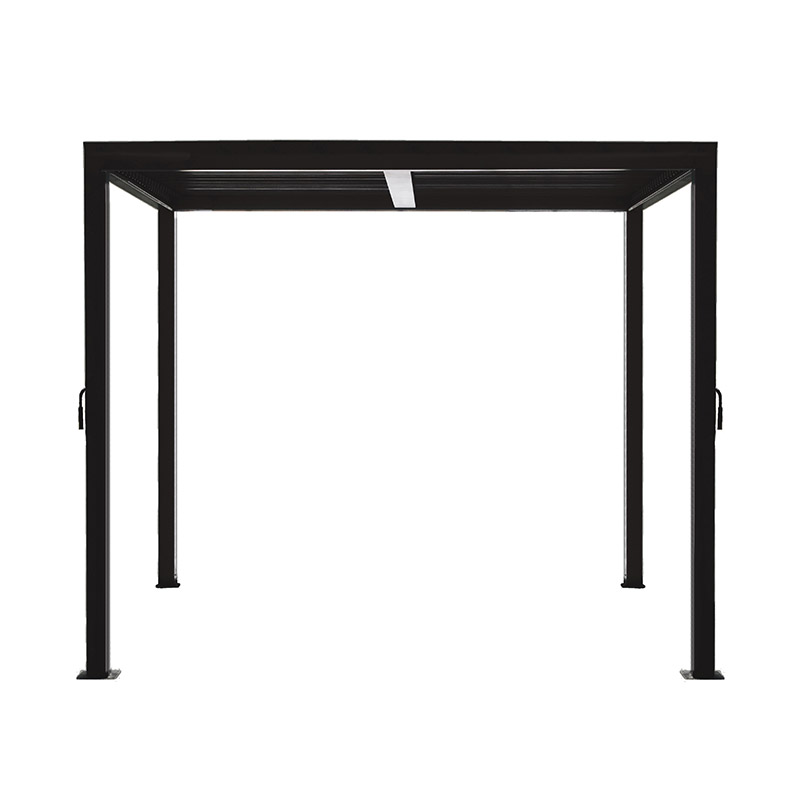
Outdoor patio projects are becoming more varied, particularly across restaurants, hotels, resorts, commercial courtyards, and large residential developments. Instead of installing one oversized structure, project teams are increasingly considering modular systems that can be configured around different spaces and expanded when requirements change. Current commercial pergola offerings highlight multi-bay layouts, customized dimensions, independent roof zones, and accessories integrated into the overall structure. For overseas buyers, understanding when modular construction makes sense can simplify both specification and installation. A Louvered Pergola For Patio Use can be especially practical when the project needs flexible coverage without forcing every area into the same configuration.
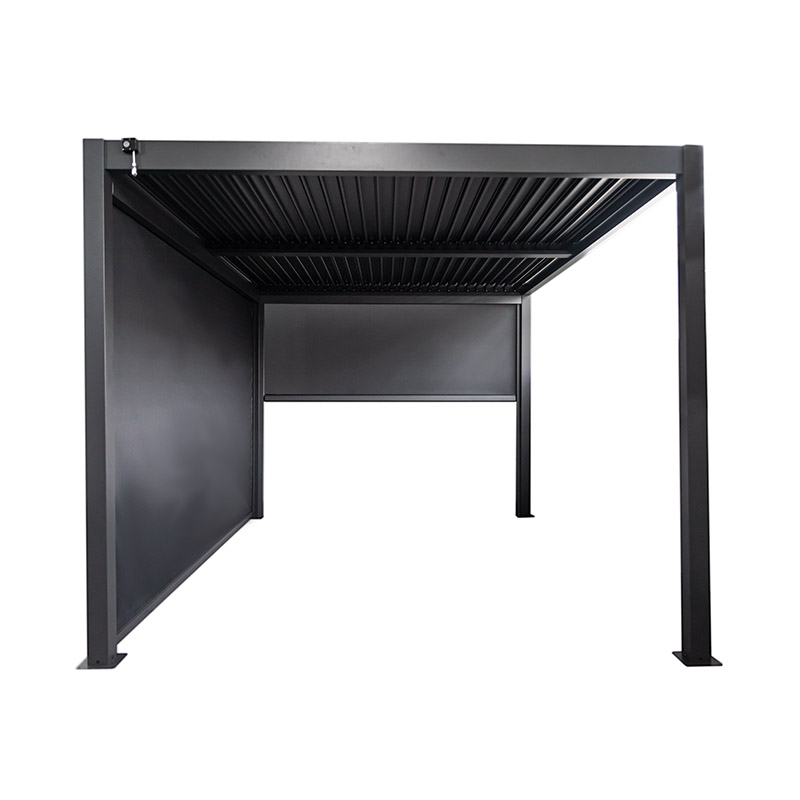
A large outdoor area may include dining tables, walkways, landscaping, entrances, pools, or existing architectural structures. Using one standard rectangular pergola across the entire space can create unnecessary structural or installation challenges.
Modular construction allows several roof sections to work together while adapting to the actual site. This approach can be useful when a project contains different functional zones or needs additional coverage later.
For commercial buyers, the value of modular design is not simply the ability to make a pergola larger. Separate bays can potentially be arranged according to the building layout, allowing the structure to follow existing walls, pathways, or outdoor seating areas.
Depending on the system, multiple modules can also operate as separate zones, giving users greater control over different sections of a large patio.
Before ordering, procurement teams should confirm:
From a manufacturer's perspective, modular construction requires consistency between profiles, connectors, louvers, drainage channels, and control components. If each section is produced to different standards, installation becomes more complicated and replacement parts become harder to manage.
Precision cutting and controlled fabrication are therefore important for larger orders. Some current pergola manufacturers emphasize site-specific design and CNC cutting to improve component consistency and installation accuracy.
For OEM buyers, this also creates an opportunity to standardize components across multiple projects while allowing dimensions and finishes to change according to individual orders.
A large patio does not always need the same amount of shade everywhere. A restaurant may require more coverage over dining tables while keeping walkways open. A resort may want different roof positions around a pool, lounge, or outdoor bar.
Zone-based control can address these differences by allowing separate sections to be adjusted according to actual use. This type of configuration is already being incorporated into commercial louvered roof systems and smart-control solutions.
Another advantage of modular planning is the ability to coordinate accessories with the structure from the beginning. Lighting, privacy screens, fans, heaters, and other outdoor features can affect beam positions, wiring, clearance, and installation procedures.
Rather than adding accessories after the pergola has been installed, project buyers should identify them during the design stage. This gives manufacturers an opportunity to reserve suitable connection points and maintain a cleaner finished appearance.
For international buyers, a large pergola project also creates logistical considerations. A modular structure can be separated into manageable components for packaging, transportation, and staged installation.
As a manufacturer, we recommend confirming module identification, hardware organization, installation drawings, protective packaging, and replacement-component availability before mass production. These details may seem secondary during quotation, but they can make a noticeable difference once the products arrive at the project site.
Modular design is most useful when flexibility is a genuine project requirement. Buyers should evaluate the site layout, intended usage, roof zones, accessories, transportation conditions, and future expansion plans before choosing a configuration.
For distributors, contractors, and commercial developers, a properly planned Louvered Pergola For Patio Use can provide adaptable coverage while keeping manufacturing, installation, and future configuration more manageable. The key is to treat the pergola as a coordinated modular system rather than simply a larger version of a standard patio roof.
Recommended Products

For any inquiries, please contact us.
Tel: +86-0576-85118676 / 18905767077
No. 26, Changtangan, Lingjiang River, Linhai City, Taizhou City, Zhejiang, China


 English
 Deutsch
 Español