2026-06-05
Linhai Lezama Leisure Products Co., Ltd.
Outdoor living spaces have evolved significantly in recent years, driven by homeowners, architects, and commercial property developers seeking more functional, adaptable environments. Across social media and design platforms, there is increasing interest in weather-responsive shading systems, privacy-enhancing structures, and energy-efficient outdoor solutions that extend usable space throughout the year.
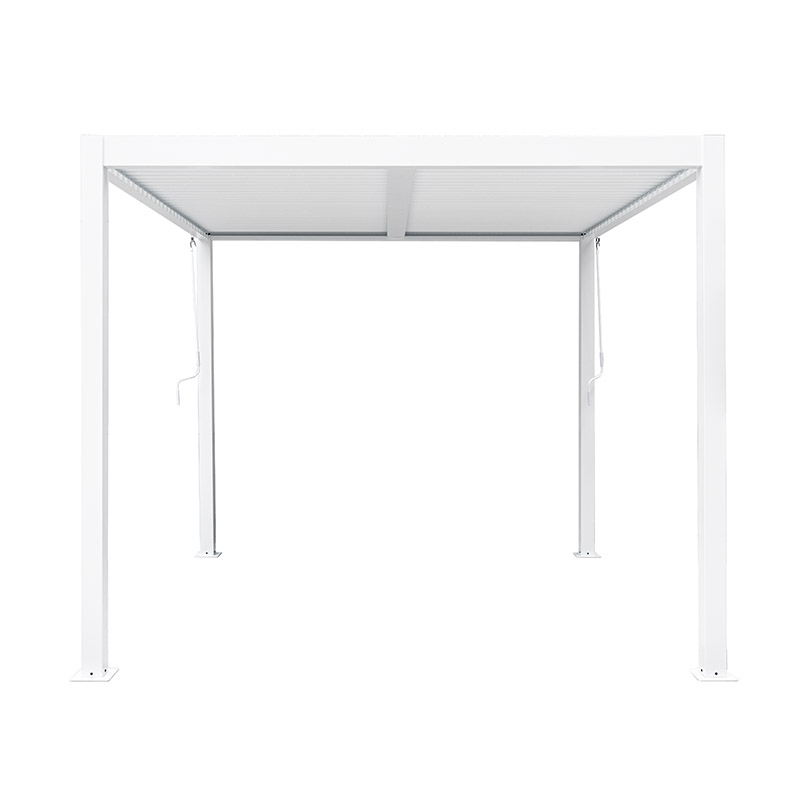
Common search trends such as "adjustable louver roof pergola for patio," "weatherproof backyard shading system," "smart pergola with rain and sun control," and "modern outdoor living structure ideas" reflect a clear shift toward multifunctional outdoor designs. Within this context, solutions like Dual-Side Independent Control Louvered Pergola are becoming highly relevant for both residential and commercial applications.
Modern outdoor structures are no longer just decorative additions. Buyers now expect integrated functionality that adapts to changing weather conditions and user preferences.
Key expectations include:
These needs are driving innovation in modular pergola systems designed for flexible outdoor environments.
One of the most discussed innovations in outdoor shading systems is independent louver control. Instead of a single fixed adjustment mechanism, dual-side control allows users to manage different zones separately.
This approach provides practical benefits such as:
As a result, designers and end users are increasingly prioritizing systems that offer zoning flexibility.
Homeowners are investing more in outdoor living due to remote working trends and lifestyle changes. Backyards, terraces, and patios are now seen as extensions of indoor living space rather than secondary areas.
Common residential use cases include:
These applications require adaptable structures that can respond quickly to weather and user needs.
Hotels, restaurants, and resorts are also adopting advanced pergola systems to enhance guest experience. Outdoor seating capacity and comfort have become competitive factors in the hospitality industry.
Typical commercial applications include:
In these environments, flexibility and durability are essential for operational efficiency.
For buyers and project engineers, structural stability and material quality are key decision factors. Outdoor installations must withstand varying weather conditions while maintaining smooth mechanical performance.
Important considerations include:
These factors directly impact installation reliability and lifecycle cost.
Sustainability continues to influence architectural design decisions. Adjustable shading systems contribute to energy efficiency by reducing heat gain and improving natural ventilation.
Benefits often highlighted by designers include:
These advantages make modern pergola systems attractive for eco-conscious developments.
As outdoor spaces become more integrated into daily living and commercial environments, demand for adaptable shading solutions continues to grow. Buyers are prioritizing systems that combine comfort, durability, and intelligent control to create usable spaces throughout changing seasons.
In this evolving landscape, Outdoor Louvered Pergola solutions are increasingly viewed as a core element of modern architectural design, offering both functional performance and aesthetic value for residential and commercial projects alike.
Recommended Products

For any inquiries, please contact us.
Tel: +86-0576-85118676 / 18905767077
No. 26, Changtangan, Lingjiang River, Linhai City, Taizhou City, Zhejiang, China


 English
 Deutsch
 Español