2026-01-09
Outdoor projects in residential and commercial settings increasingly include the Louvered Pergola With Sturdy Aluminum Frame. This structure serves practical purposes beyond visual appeal, providing adaptable shade and defined outdoor zones across patios, gardens, and shared spaces. Its growing presence reflects a focus on durability, controllable comfort, and structural efficiency.
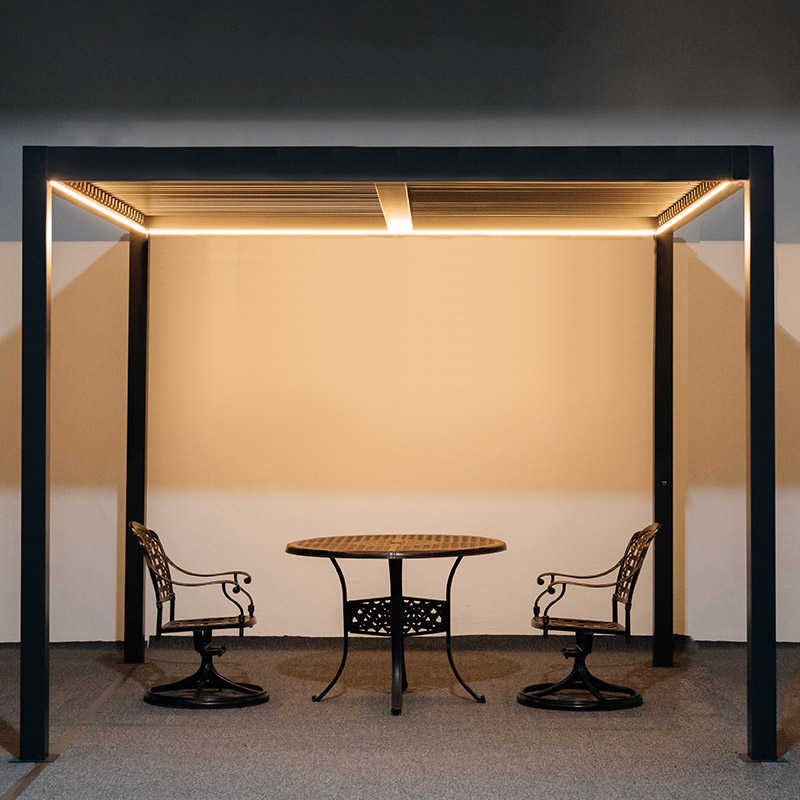
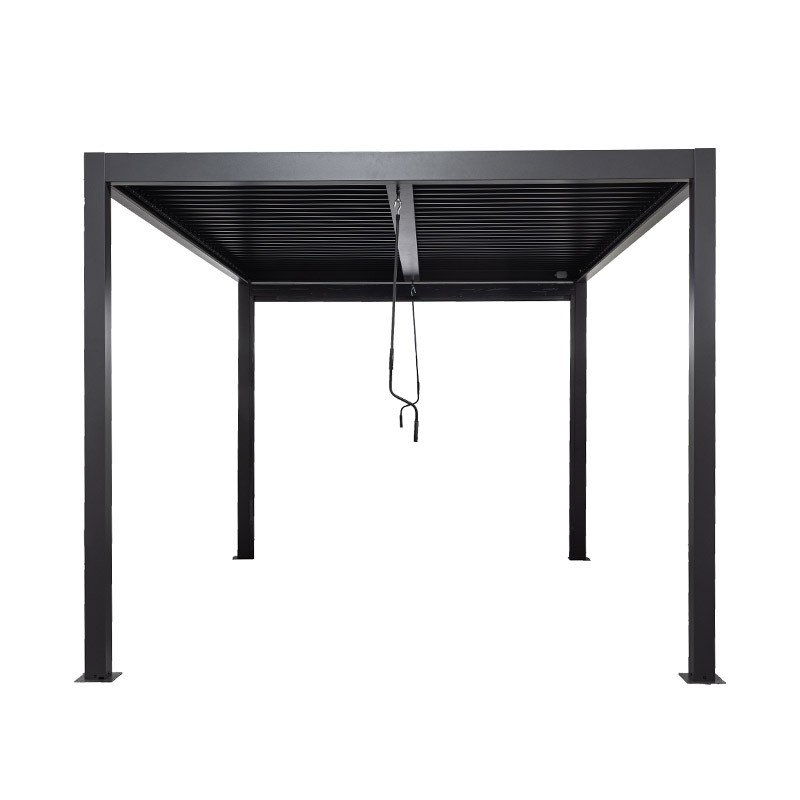
Aluminum remains a key material in pergola construction due to its balance of strength and resistance to environmental exposure. Structural aluminum alloys commonly used in outdoor frameworks offer reliable load support while resisting corrosion. According to data from the Aluminum Association, aluminum components used outdoors maintain performance over long service periods when protected by surface treatments. Powder-coated finishes further shield frames from moisture, ultraviolet exposure, and surface wear, reducing the need for frequent upkeep.
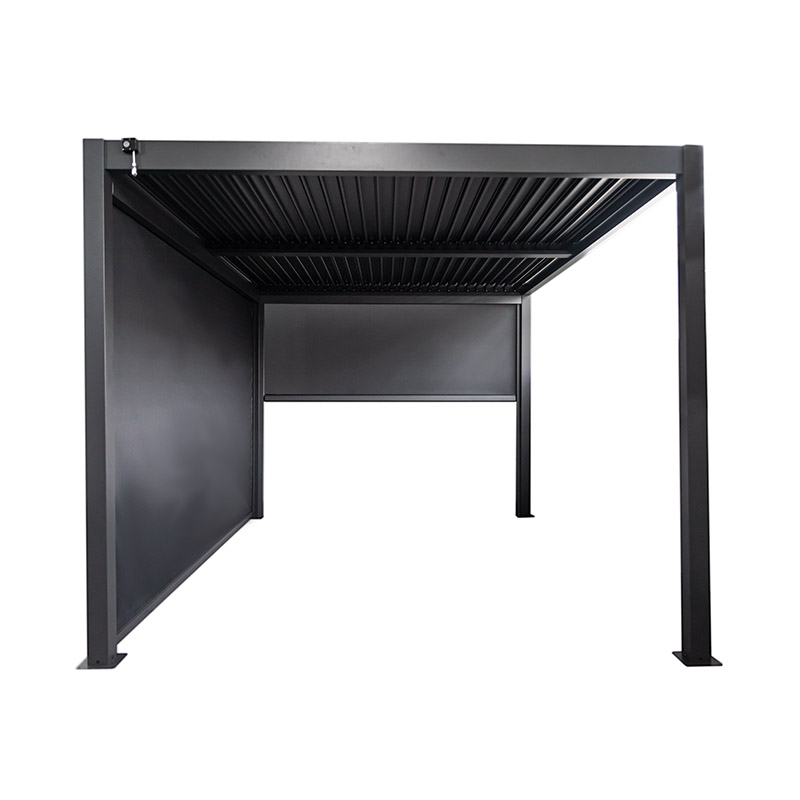
Roof configuration distinguishes louvered pergolas from fixed-roof alternatives. Adjustable louvers rotate to regulate sunlight and airflow, allowing outdoor areas to remain usable under varying conditions. Open louvers support ventilation and natural light, while closed positions help reduce glare and provide coverage during light rain. Product evaluation data from outdoor structure manufacturers shows that adjustable louver systems can significantly reduce direct solar exposure depending on blade angle and spacing, improving thermal comfort in seating areas.
Rain control plays an important role in pergola performance. Many aluminum louvered designs incorporate concealed drainage channels inside roof beams and vertical posts. These systems guide rainwater downward and away from occupied areas, limiting surface runoff near furniture and walkways. Engineering specifications indicate that integrated drainage systems manage steady rainfall efficiently when installed on level foundations. Proper slope and alignment remain essential to support effective water flow.
Installation quality strongly influences long-term performance. Many pergola kits are designed for homeowner assembly, though professional installation is often chosen for larger structures. Builders commonly recommend anchoring pergolas to concrete slabs or reinforced decks to improve stability. Structural guidance from construction professionals emphasizes accurate leveling during installation, which helps preserve smooth louver operation and reduces stress on moving components over time.
Commercial environments also adopt aluminum louvered pergolas for functional reasons. Restaurants, cafés, and hospitality venues use these structures to create flexible outdoor seating areas without permanent construction. Facility managers often point to controlled shade, reduced maintenance demands, and adaptable layouts. Market data from outdoor living distributors shows steady purchasing activity from commercial buyers seeking modular outdoor solutions that accommodate seasonal use.
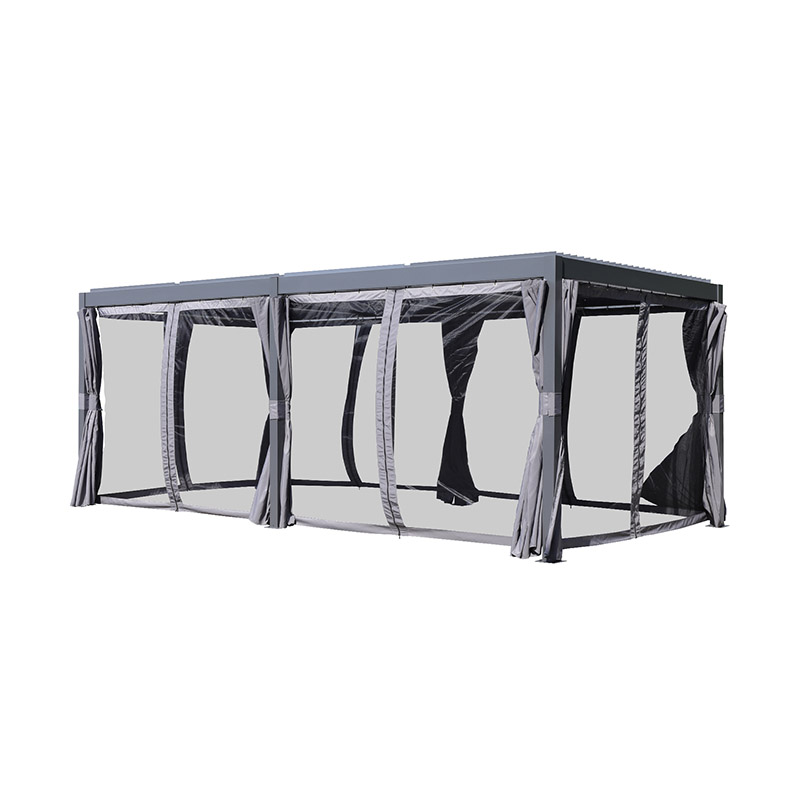
Design compatibility supports broader adoption. Aluminum pergolas feature clean lines and neutral finishes that integrate easily into modern and transitional outdoor layouts. Common color options include black, gray, and white, which pair well with stone paving, composite decking, and landscaped surroundings. The ability to add accessories such as lighting or side screens further enhances functional value.
Overall, the Louvered Pergola With Sturdy Aluminum Frame functions as a practical outdoor structure rather than a decorative element alone. Material reliability, adjustable roof control, integrated drainage, and installation precision continue to shape how these pergolas are applied across outdoor projects.
FAQ
Why is aluminum commonly used for pergola frames?
Aluminum offers corrosion resistance, structural stability, and low maintenance requirements in outdoor environments.
How do louvered roofs affect outdoor comfort?
Adjustable louvers allow control over sunlight, airflow, and light rain exposure throughout the day.
Is a foundation necessary for installation?
A stable foundation such as concrete or reinforced decking improves structural performance and longevity.
Can these pergolas manage rainfall effectively?
Integrated drainage systems help redirect rainwater away from seating areas when properly installed.
Where are aluminum louvered pergolas typically used?
They appear in patios, gardens, pool areas, restaurants, cafes, and shared outdoor spaces.
Recommended Products

For any inquiries, please contact us.
Tel: +86-0576-85118676 / 18905767077
No. 26, Changtangan, Lingjiang River, Linhai City, Taizhou City, Zhejiang, China


 English
 Deutsch
 Español