Home / News / Industry News / Can Better Project Communication Make an Adjustable Roof Pergola Easier to Order?

2026-10-23
Linhai Lezama Leisure Products Co., Ltd.
Ordering an outdoor structure is rarely just a matter of choosing a product from a catalog. When dimensions, installation conditions, appearance requirements, and operating functions vary from project to project, unclear information can create unnecessary changes between quotation, sampling, production, and installation. For buyers sourcing an Aluminum Pergola With Adjustable Roof, a clear project brief can make communication with a manufacturer much more efficient. The goal is not to provide more information than necessary, but to make every important requirement easy to understand and confirm.
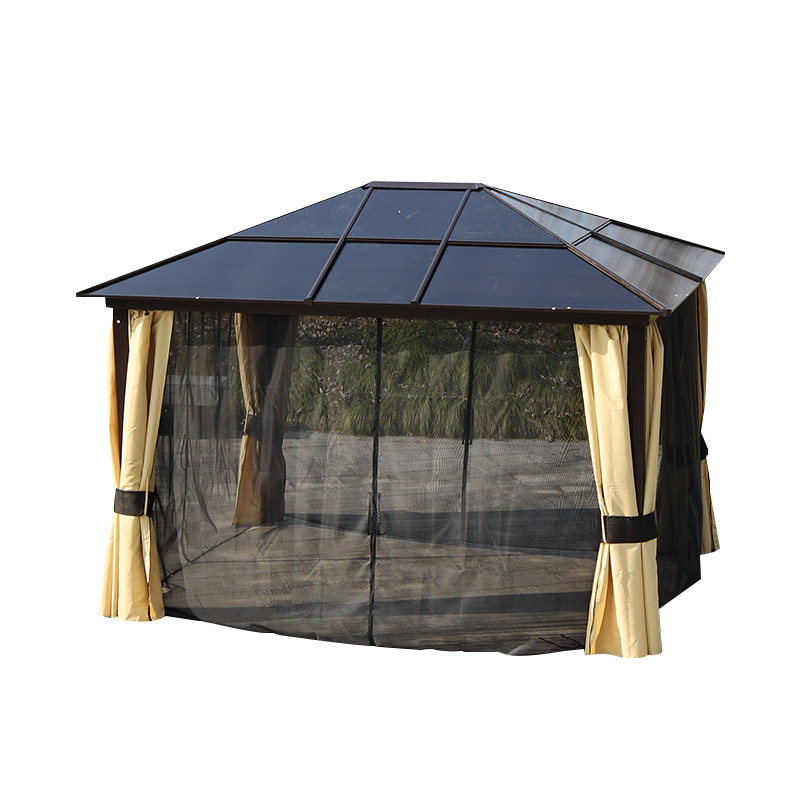
Before discussing detailed customization, buyers should establish the basic conditions of the project. The manufacturer needs to understand what the pergola is expected to do and where it will be installed.
Useful information can include:
A clear starting point gives the manufacturer a practical basis for discussing the design.
Written descriptions are useful, but dimensions and structural relationships are often easier to understand through drawings. Even a simple project drawing can clarify the position of posts, beams, roof sections, and installation points.
For customized orders, buyers can provide their own drawings or review drawings supplied during the product development process. Important dimensions should be checked before production instead of relying on assumptions.
This step can prevent small misunderstandings from becoming manufacturing changes later.
Not every product detail needs to be treated with the same level of rigidity. Buyers can separate the requirements that cannot change from those that can be adjusted during development.
For example, installation dimensions may be fixed because they are determined by the available space, while certain appearance details may have several acceptable options.
This distinction allows the manufacturer to focus attention on the details that directly affect project compatibility.
An adjustable roof involves more than its visual appearance. Buyers should confirm how the roof is expected to operate and what control arrangement is required for the project.
The operating configuration should be matched with the overall structure and installation environment. If a project requires a particular control position, access arrangement, or operating method, these details should be discussed before production.
Clear confirmation at this stage can reduce changes after the structure has been manufactured.
When a sample or prototype is available, approval should cover more than general appearance. Buyers can use the sample to confirm the details that will become the production reference.
These may include:
A specific approval record gives both buyer and manufacturer the same reference for the next production stage.
Large outdoor structures contain multiple profiles and components, so packaging should be considered during order planning rather than after production is finished.
Different components should be organized in a way that makes identification easier during receiving and installation. Protection should also be considered for surfaces and connection parts during handling and transportation.
For buyers, clear component labeling and packaging requirements can make the transition from delivery to installation more manageable.
For distributors, contractors, and buyers handling multiple projects, a completed order can become a useful reference for future purchasing. Instead of rebuilding the specification each time, the approved configuration can be recorded and updated only when a project requires changes.
A manufacturer can use this information to understand which dimensions, finishes, accessories, and structural arrangements have already been approved. This creates a more consistent communication process for repeat orders.
For an Aluminum Pergola With Adjustable Roof, effective purchasing is not only about selecting the right structure. Clear project information, drawings, configuration details, sample approval, packaging requirements, and repeat-order records can make communication much easier between buyers and manufacturers. When these details are established before production, the manufacturer has a clearer production reference and the buyer has greater control over the final project requirements.
Recommended Products

For any inquiries, please contact us.
Tel: +86-0576-85118676 / 18905767077
No. 26, Changtangan, Lingjiang River, Linhai City, Taizhou City, Zhejiang, China


 English
 Deutsch
 Español